


You knew something was going on before anyone else did.
The teacher emails about missing assignments. Can’t sit still. There’s ADHD on both sides of your family, and you’ve watched your child struggle with focus since kindergarten. So you request an evaluation, you wait, you sit through the meeting — and the school tells you they don’t see it educationally.
You leave that meeting holding a report that doesn’t match the child you live with.
The part nobody explains
Somewhere in your file is a packet with tiny print on it: your procedural safeguards. Buried in there is a right most parents never hear said out loud.
If you disagree with the evaluation your school district completed, you can request an Independent Educational Evaluation — an IEE — at the district’s expense. A second opinion, funded by the district that did the first one.
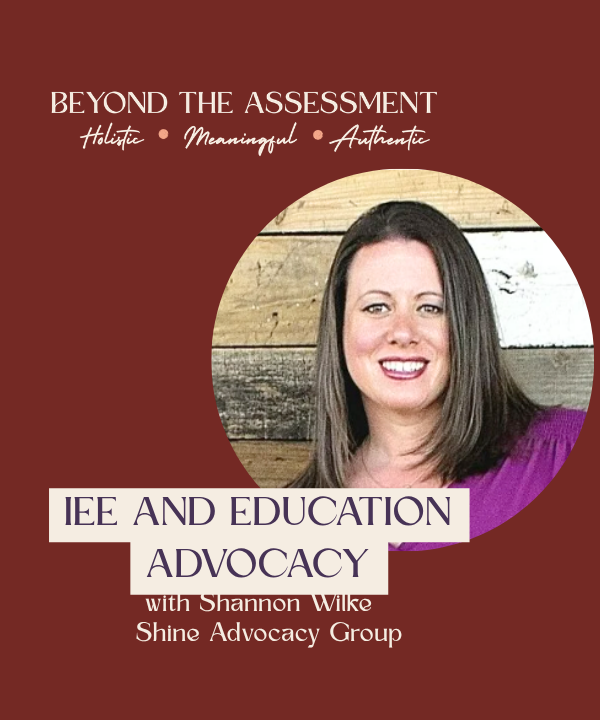
We sat down with Shannon Wilke, founder of Shine Advocacy Group, who has spent more than two decades helping Arizona families navigate this exact moment. Her group drafts these requests for families roughly every week. Watch the full conversation here:
Think of it as a second opinion
If a doctor handed you a diagnosis and a treatment plan you weren’t sure about, you’d get a second opinion without hesitating. Nobody would call that hostile. It’s just what a careful parent does.
An IEE is the same thing.
Sometimes the first evaluation missed something. Sometimes the academic testing was abbreviated. Sometimes the social-emotional piece wasn’t touched at all. Sometimes the school psychologist simply doesn’t specialize in autism, and autism is exactly what you suspect. A second set of expert eyes catches what a first set didn’t.
What you need to know before you request one
Send it to the district, not the school. The request goes to the district’s special education director — not your child’s teacher or principal.
You have two years. The request must come within two years of the date of the district’s evaluation. Two years and one day, and the window has closed.
The district that tested is the district that pays. Even if your child has since moved to a different school, the district that completed the original evaluation remains responsible.
Less is more. This is the piece Shannon emphasized most. Your request needs to say that you disagree, and briefly why — “the evaluation was not thorough,” or “I suspect ADHD and the school did not evaluate for it.” That’s it.
Where families get into trouble is saying too much. The district calls, the parent starts explaining, and somewhere in that conversation they say “well, actually, it’s really just the speech portion I disagree with.” They’ve now waived their right to everything but speech. Shannon’s group sees very few denials — and the ones they do see almost always come from over-explaining.
You don’t need an attorney. You may not even need an advocate. Shannon will send families a three-sentence template on a free consult. The request itself is genuinely simple. What’s complicated is everything that comes after it.
What happens next
The district must respond within a “reasonable” time — which the law never defines. Shannon’s average is around two weeks, though a request sent at the end of the school year may not get answered until fall.
One small language shift she recommends: instead of writing “please let me know if it is approved,” write “please let me know when it is approved.”
Once approved, you submit the provider you want to use. And here’s the part districts don’t always volunteer: you are not limited to the list they hand you. A district may tell you “these are the providers, and this is the maximum we’ll pay.” Districts are required to fund an IEE at a reasonable rate for your community — but a low cap or a short list can quietly limit your child to a provider with less experience, less specialization, or in some cases less credentialing than your child needs. You’re able to access qualified providers in your community who perform IEEs. If you’ve been handed a cap, that’s exactly the moment to ask for guidance.
What an IEE looks like at our center
We complete IEEs for districts across Arizona and we’re an approved provider — all of our districts have approved our rate, so it’s never been a sticking point.
Once the district issues the purchase order, we call you to schedule. From there, it runs like any private evaluation we do:
- A parent meeting — we start with your history, your concerns, and what you’ve been seeing at home.
- A four-hour testing block with your child — comprehensive, covering the areas that matter, not an abbreviated version.
- A feedback meeting within one to two weeks — we sit down and walk you through every result.
- We attend the district meeting with you. Every time. We present the data, discuss eligibility, ask the teacher how things look in the classroom, and talk through how our scores compare with the district’s. Parents are often surprised we show up. Of course we show up — that’s crossing the finish line.
And the billing goes directly to the district. We have the agreement in place before we begin. You never see an invoice.
“But I don’t want to make anyone mad”
This is the fear we hear most, and it stops good parents cold. I don’t want to create conflict. I don’t want the district to think I’m difficult. Isn’t hiring an advocate what you do when things have already fallen apart?
Here’s what Shannon shared: educators are her largest client group. Principals, school psychologists, special education directors, special education teachers. She has more consults with educators than non-educators — because they know the process from the inside, and they use it for their own children.
If the people who run these meetings for a living request IEEs and hire advocates for their own kids, you are allowed to do it for yours.
Nobody goes into education for any reason other than wanting to help kids. Asking for a second opinion isn’t an accusation. It’s collaboration — everyone at the table, all looking at the same child.
Your next step
You don’t have to figure out the district’s process, the two-year window, and the right wording on your own.
Here’s what to do:
- Book a free 15-minute consultation with us. We’ll talk through your child’s evaluation, whether an IEE makes sense, and what to write.
- Send your request to the district — and copy us on it. After years of doing this, we know the nuances, and we can follow up on your behalf when the response is slow.
- We complete the evaluation and stand beside you at the meeting. The district is billed directly. You get answers.
Getting answers early is the single most powerful thing you can do for your child. Every month you wait is a month of supports your child doesn’t have.
Learn more about Independent Educational Evaluations at azassessment.com/services.
Connect with Shannon Wilke at shineadvocacy.com — she offers free consults, runs the IEP School Supports Facebook group, and hosts the Shine Bright Experience membership for families who want ongoing guidance.






+ show Comments
- Hide Comments
add a comment